
Transforming African Creativity into Global Competitiveness
Executive Summary
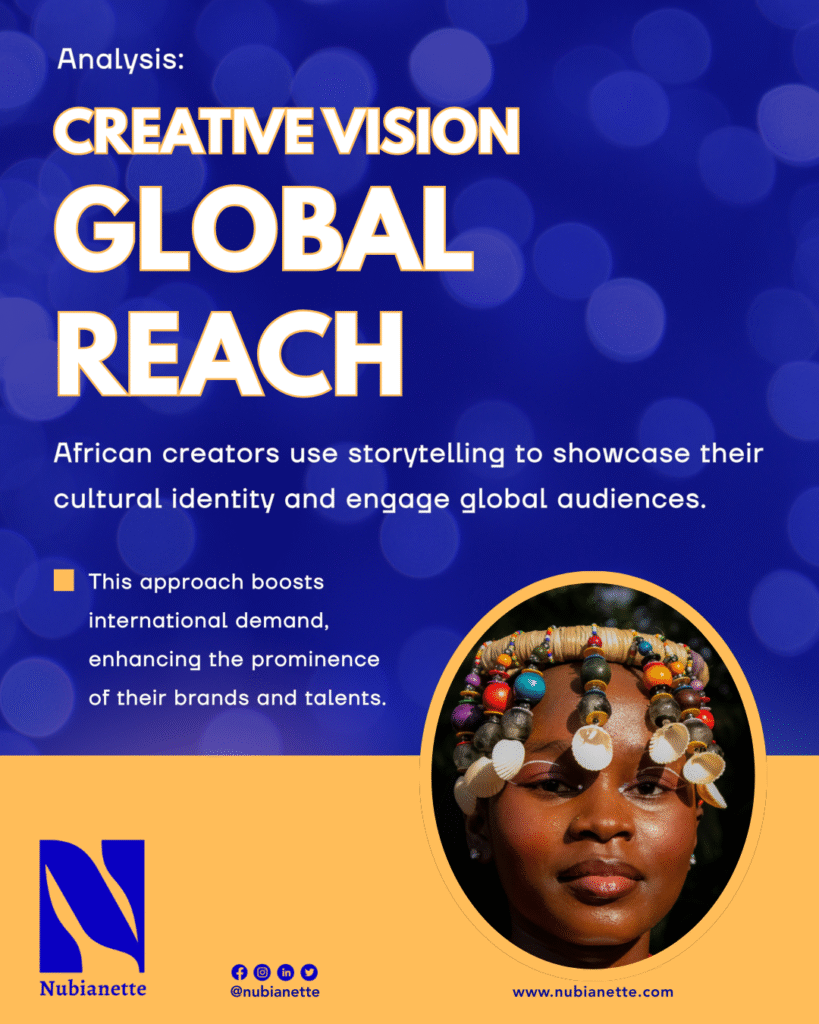
Africa’s creative industries are increasingly shaping global conversations around culture, identity, and commerce. Nigerian creators, particularly in music, fashion, and visual arts, have emerged as global powerhouses. With Afrobeats artists achieving Grammy wins, and fashion designers collaborating with international luxury houses, the continent’s cultural exports are stronger than ever. Yet, while Nigeria’s projected fashion export value in 2025 is estimated at USD 15.5 billion, the sector remains under-optimized due to infrastructure gaps, limited market access, and regulatory bottlenecks.
This report examines the nexus of creative vision, export readiness, and brand positioning, offering insights into how African creators can convert cultural capital into scalable, sustainable businesses with global reach.
1. Creative Vision and Global Reach
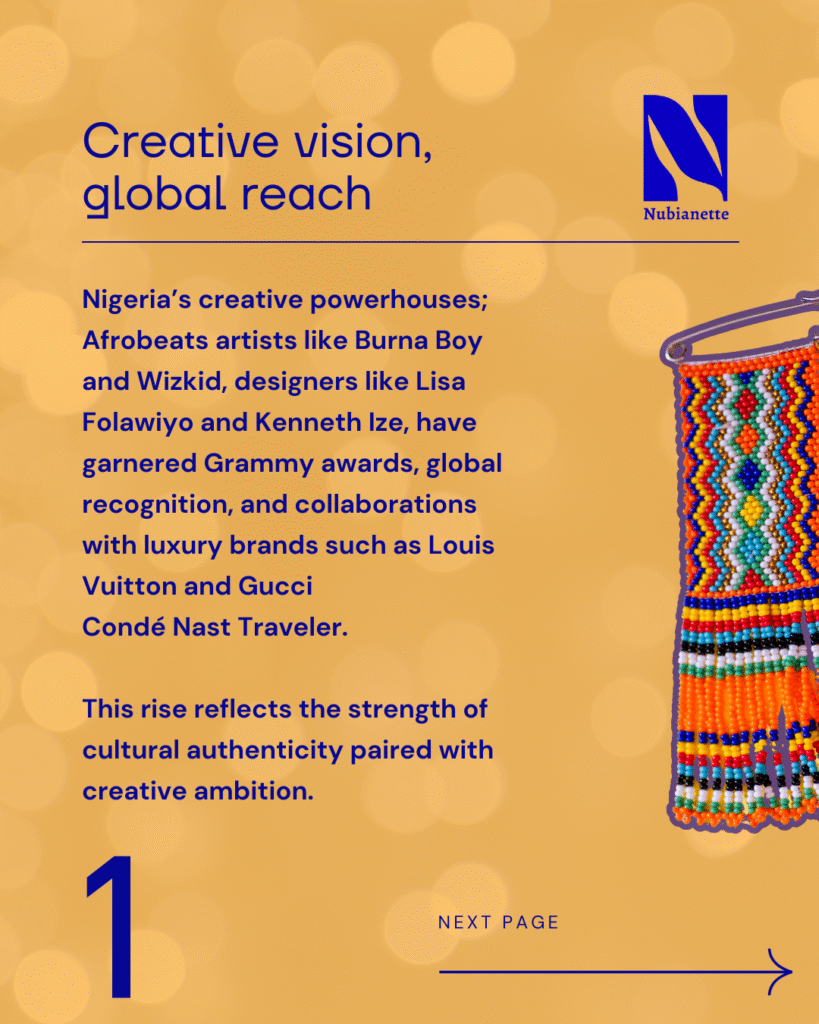
Storytelling remains central to African creativity. Artists leverage cultural narratives to build distinctive brands that resonate globally.
Music Industry: Afrobeats has grown into a multi-billion-dollar sector. According to PwC, Nigeria’s music revenues are projected to exceed USD 44 million by 2025, driven largely by streaming platforms and international tours. Burna Boy and Wizkid have not only won Grammys but also headlined global festivals, positioning Nigeria as a creative hub of influence.
Fashion Industry: Designers such as Lisa Folawiyo and Kenneth Ize have worked with houses like Louis Vuitton and Gucci, showing that authentic African creativity is attractive to luxury markets.
Cultural Tourism: The United Nations Conference on Trade and Development (UNCTAD) estimates that creative industries account for 3% of global GDP, highlighting untapped potential for Africa to scale exports through structured engagement.
2. Unlocking Export Opportunities
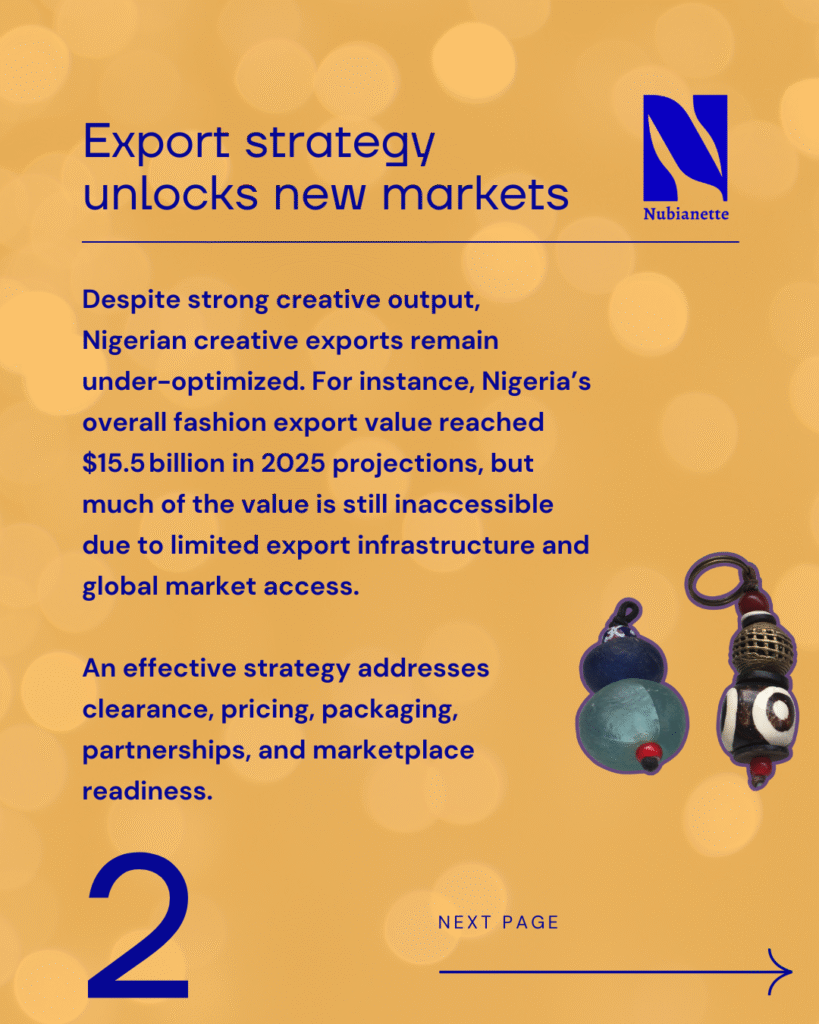
Despite rapid growth, creative exports remain constrained.
Fashion Exports: Nigeria’s projected USD 15.5 billion in fashion exports represents only a fraction of its potential. Comparatively, South Africa, with a more developed export structure, channels higher value through international retail chains.
Barriers: These include weak export infrastructure, fragmented trade policies, and limited financing for small and mid-sized creative enterprises.
Strategic Levers:
Streamlined clearance and regulatory compliance.
Improved packaging and logistics to meet international standards.
Building partnerships with e-commerce marketplaces.
3. Brand Positioning for Sustainable Growth
Creative businesses thrive when cultural authenticity is merged with global business practices.
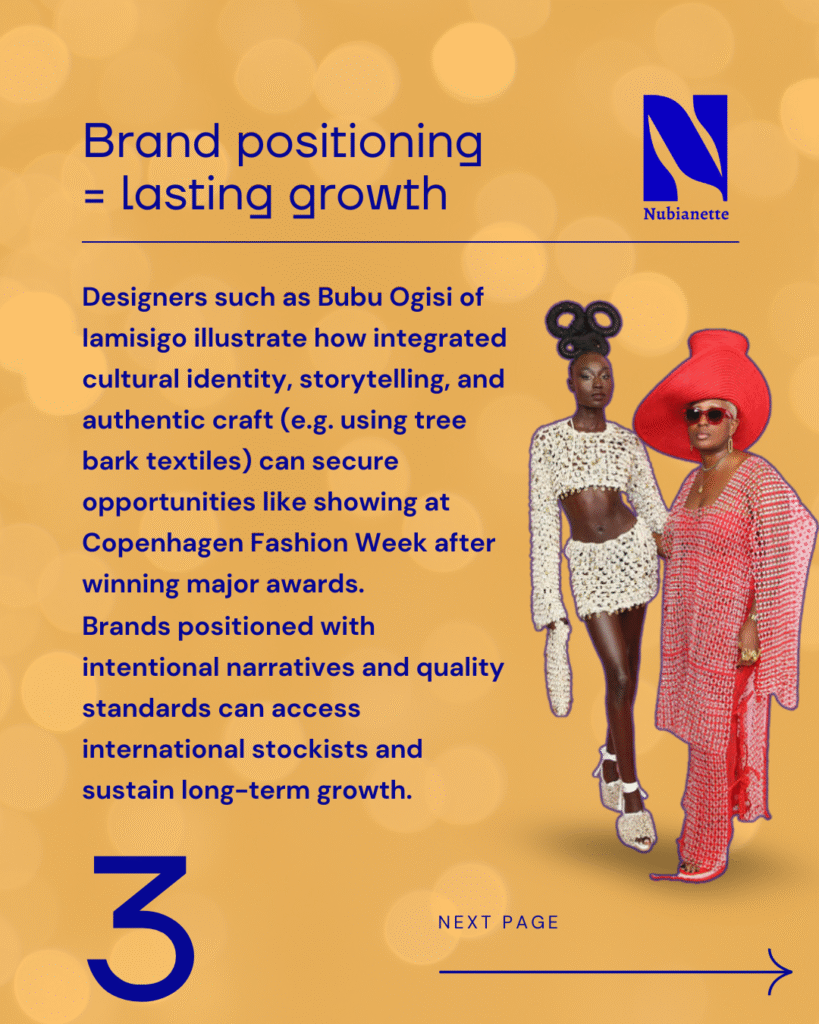
Case Study – Iamisigo (Bubu Ogisi): By integrating indigenous craft traditions (tree bark textiles) with innovative design, Iamisigo secured features at Copenhagen Fashion Week and attracted global stockists.
Narratives that Sell: Data from McKinsey’s State of Fashion Africa Report (2022) shows that 70% of African brands with strong storytelling secured at least one international stockist, compared to 30% without strong brand narratives.
Consumer Trends: Gen Z and millennial consumers globally are 1.5x more likely to support brands that showcase authenticity, sustainability, and inclusivity.
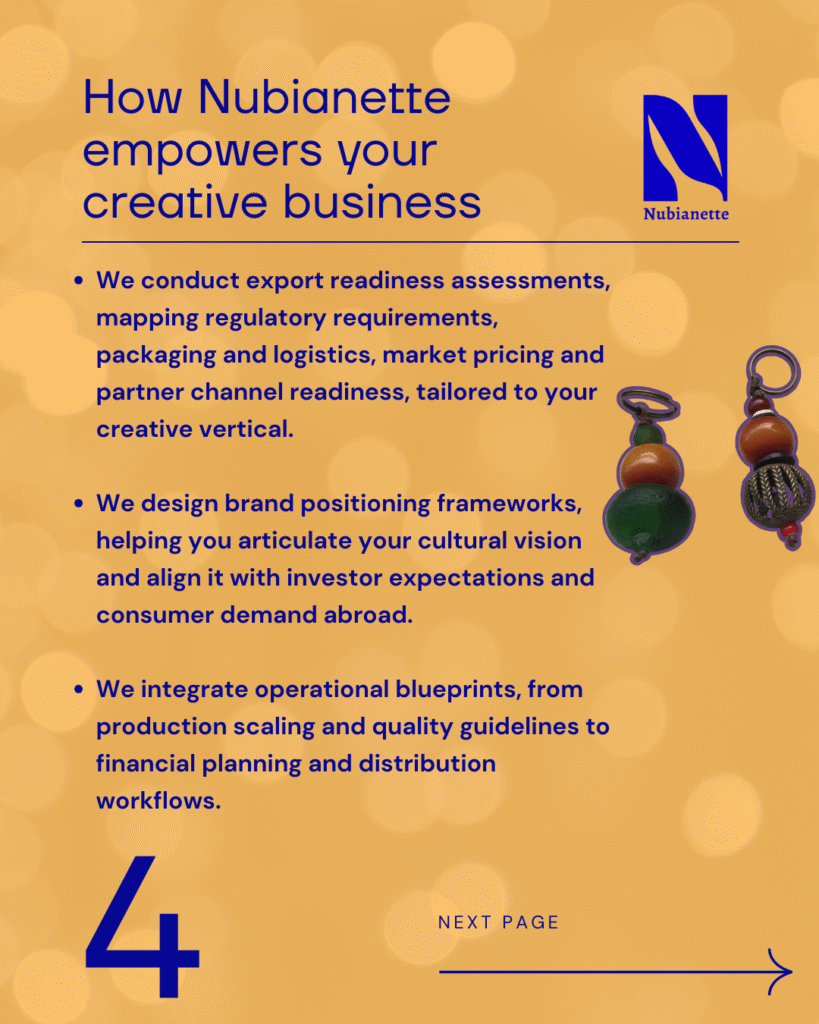
4. Nubianette’s Framework for Empowering Creative Businesses
To bridge systemic gaps, Nubianette provides a three-pillar model:
Export Readiness Assessments; Mapping compliance, packaging, pricing, and distribution strategies.
Brand Positioning Frameworks; Aligning cultural storytelling with investor expectations and international consumer demand.
Operational Blueprints; Enabling scaling through production workflows, financial planning, and distribution.
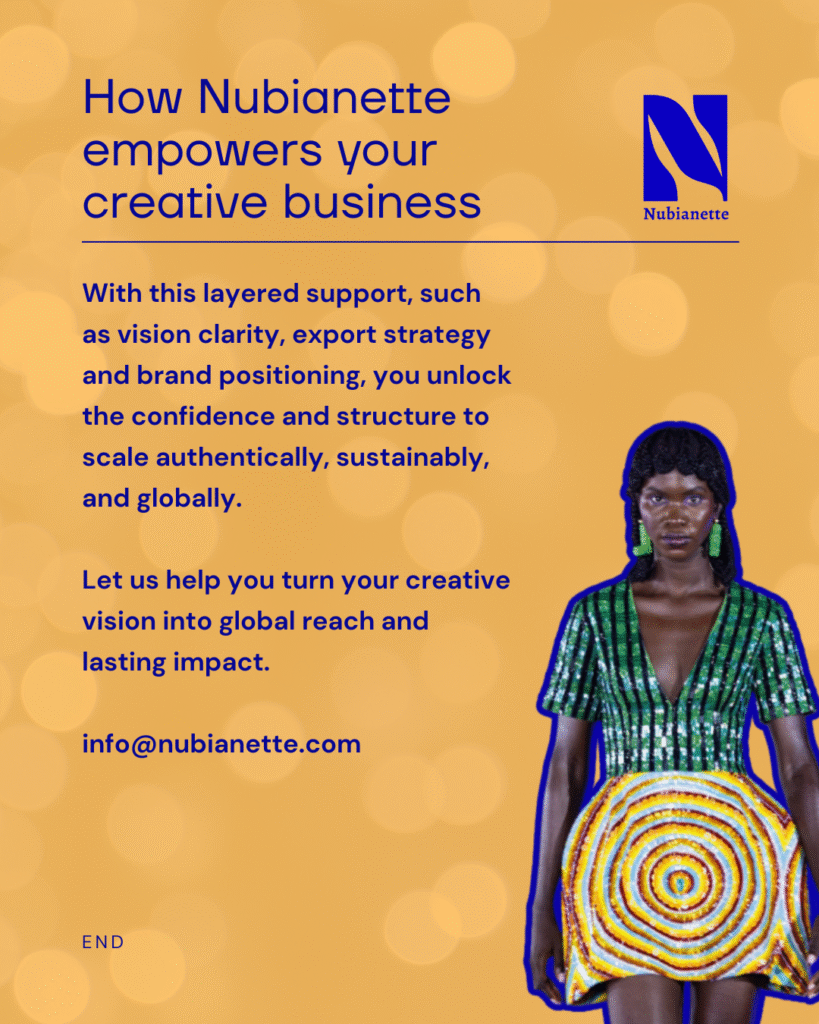
This structured approach empowers creators to scale authentically, sustainably, and globally.
Conclusion
The Nigerian creative economy holds immense potential, but realizing it requires intentional strategies that combine cultural authenticity with market readiness. With structured export frameworks, effective brand positioning, and targeted operational support, African creatives can capture greater global market share and create lasting impact.
Nubianette positions itself as a strategic partner in this journey, bridging the gap between vision and execution.
References
PwC. (2021). Entertainment and Media Outlook: Nigeria 2021–2025.
UNCTAD. (2022). Creative Economy Outlook: Trends in International Trade in Creative Industries.
McKinsey & Company. (2022). The State of Fashion: Africa Edition.
World Bank. (2023). Nigeria Economic Update: Seizing Opportunities in the Digital and Creative Economy.
Nubianette (2025). Creative Industry Analysis Report.